

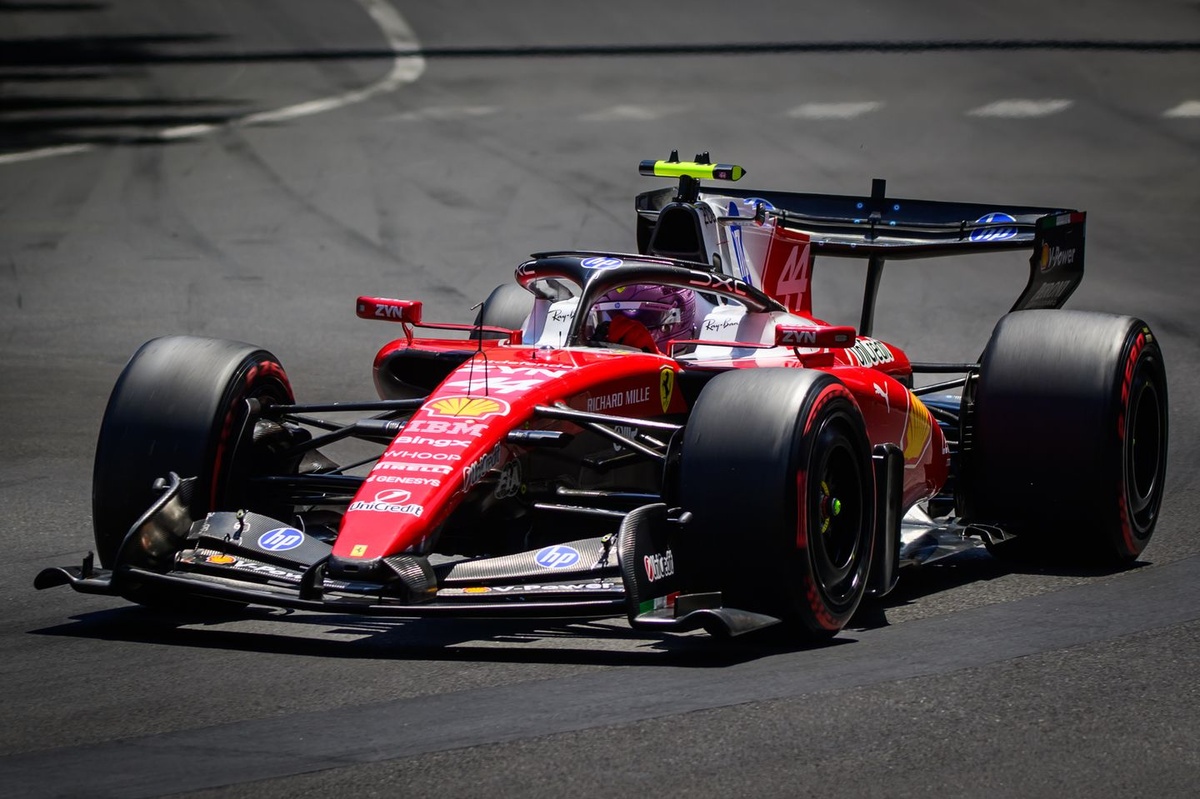
Ferrari's SF-26 was considered the best-suited car for Hungaroring, with its ability to handle high cornering speeds during low-speed overtaking. Many, including rival teams, described the Italian team's chassis as the most agile in F1. However, Lewis Hamilton finished fifth and Charles Leclerc fourth, leaving Ferrari completely off the podium with both drivers. Lando Norris won the race, and McLaren team principal Andrea Stella described Norris's pole position in qualifying as a "top performance," while acknowledging that McLaren's chassis had not yet reached Ferrari's level.
Errors accumulated from the sorting process.
Hamilton and Leclerc shared the 1-2 positions in FP2 during Friday's practice sessions; Leclerc was the fastest in FP1. However, both drivers finished behind Norris in FP3 and qualifying. Hamilton missed pole position by only 0.012 seconds; he was then dropped three places for blocking Oscar Piastri's second fastest lap and started Sunday's race in fifth place. Leclerc, meanwhile, finished two hundredths of a second behind Hamilton in qualifying and started from second place.
Both Ferraris started the race on soft tires; meanwhile, all the other leading teams opted for medium compound. Leclerc fell behind Piastri, Verstappen, and Hamilton at the first corner and was unable to make an effective move throughout the race. Hamilton had a poor start, failing to overtake Max Verstappen's Red Bull, which negatively impacted his entire race strategy. Hamilton later managed to overtake Verstappen with a pit stop; however, under the virtual safety car announced late in the race, he fell behind both Verstappen and Mercedes driver Kimi Antonelli after a pit stop order from his team. The used soft tires fitted at that stop were not enough to overtake his two rivals. On top of that, he received a 5-second penalty for exceeding the speed limit in the pit lane and dropped from fourth to fifth place.
Leclerc: Inconsistency is a problem that needs to be understood.
Ferrari team principal Frederic Vasseur described the events as a chain of errors that fed off each other in his post-race statement. Neither Leclerc nor Hamilton had the new medium Pirelli set for the race, as they had used it in qualifying; moreover, both were unhappy with the car's performance on the medium compound throughout the weekend. While racing on soft tires in ambient temperatures of 31 degrees Celsius and asphalt temperatures of 51 degrees Celsius carried risks, as Pirelli had pointed out from Friday onwards, the tires showed much better durability than expected; indeed, Verstappen completed the rest of the race on a used soft set, which he fitted at the end of lap 41.
Hamilton, however, openly questioned his final pit stop: “I was called right before the pit lane entrance, I didn’t have time to argue. I would never choose to stop if I was going to lose track position,” he said. The stop itself wasn’t without problems; Hamilton locked the brakes, re-entered the track at the wrong spot, slowed down the wheel change, and deactivated the speed limiter a moment too early.
Leclerc, looking at the last three races, presented a striking picture: “In two races where we expected to fight, we finished first and second; in the race where we thought we would do well, we finished fourth and fifth. It’s understandable that both cars exhibit this tendency,” he said. Leclerc also emphasized the inconsistency of the car: “Lewis struggles in some stints, I struggle in others, and it’s really strange that everything is so uncorrelated.”